
A toothache refers to pain in or around a tooth. This pain can range from mild discomfort to severe pain. Low pain may be temporary gum irritation and improve with basic care at home. However, a toothache usually indicates a crucial problem, such as cavities. These problems are not cured on their own and require rapid treatment from a dentist.
Identifying the type of toothache can help you determine the underlying problem and guide you to proper treatment. Here are the most common teeth Pain and what it can indicate:
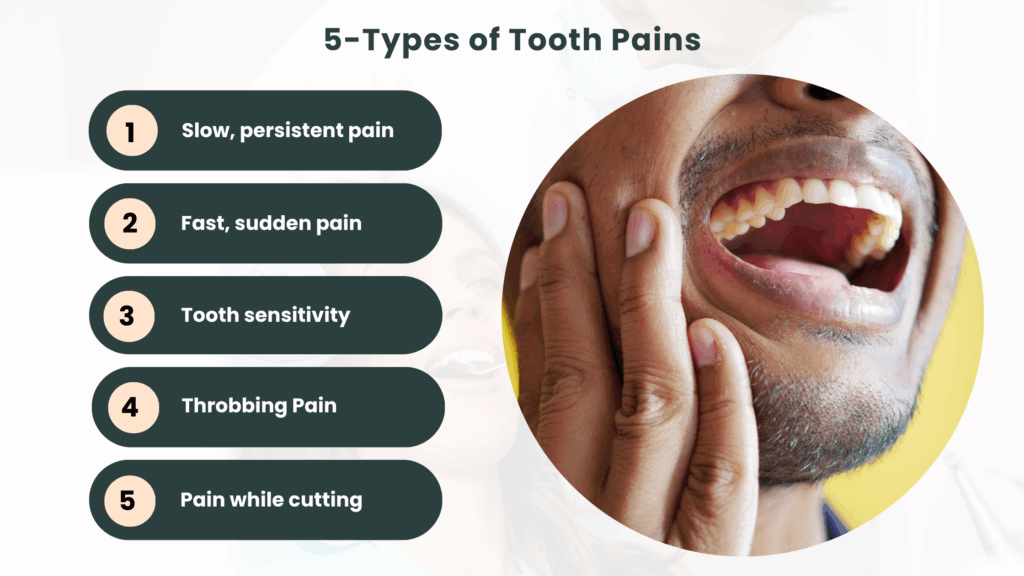
It is one of the most common types of toothache. This can be caused by food particles that get stuck between the teeth, grinding of the teeth (bruxism), or inflammation of the gums. Although this may look modest, the ongoing dull pain should never be ignored.
This type of pain is often acute and disruptive. This is usually caused by the decay of teeth or a broken tooth that has exposed the inner nerve. While pain can come and go, it usually worsens without treatment.
Sensitivity is the experience of pain or discomfort following the intake of hot, cold, sweet, or sour foods and beverages. Enamel, cavities, gum disease, or worn teeth are common. Light sensitivity can be controlled with special toothpaste, but in severe cases, dental care is required.
A vibrant or beaten toothache often indicates a severe infection. In such cases, a root canal is required to remove infection and protect the tooth. If it is not treated, the infection may spread to the surrounding tissue or other parts of the body.
Pain is felt under pressure or pressure on a tooth, which may be caused by cracked teeth, severe cavities, loose filling, or gum disease. This type of pain indicates structural or infectious problems that require by a dentist.
Although tooth pain may be unannounced, a good number of them can be averted through good care. These are some of the tips to prevent toothache:
Use a toothbrush to brush your teeth with a fluoride toothpaste at least twice a day (twice a day for two minutes) using a soft-brush toothbrush. Do not forget to remember that one should make a daily floss to clean the gutters and food remnants in the teeth.
The incorporation of an antibacterial or fluoride mouthwash as part of the routine will aid in the removal of detrimental bacteria, enamel fortification, and the prevention of cavities and gum disease.
Bacteria are promoted by rotten foods and drinks. Alternatively, you can consume a well-balanced diet with calcium, vitamin D, and other nutrients that make teeth and gums healthy.
Many glasses of water rinse particles and bacteria, keeping their mouth moist and therefore reducing the possibility of decay.
See the dentist every six months and clean the teeth professionally, and check them. The routine checks also enable identification of difficulties before they become excruciating or addictive.
A toothache can vary from mild pain, but it is often a sign that someone needs to pay attention. Understanding the type of toothache you have allows you to take immediate action before the problem worsens.
Maintaining proper oral hygiene, eating a balanced diet, and seeing a dentist on a regular basis are all crucial. See a dentist right away if you have severe or frequent toothaches. Initial treatment can save your teeth and protect your smile.
In Harish Dental, we are here to help you live a healthy mouth-free life.
© Harissh Dental Clinic Powered by Creativepoint